
Last updated September 10, 2026
Full 25-point door and opener safety check with every visit - springs, cables, rollers, tracks, and your LiftMaster or Chamberlain opener included
You get a price before we start. It does not change when the truck arrives.
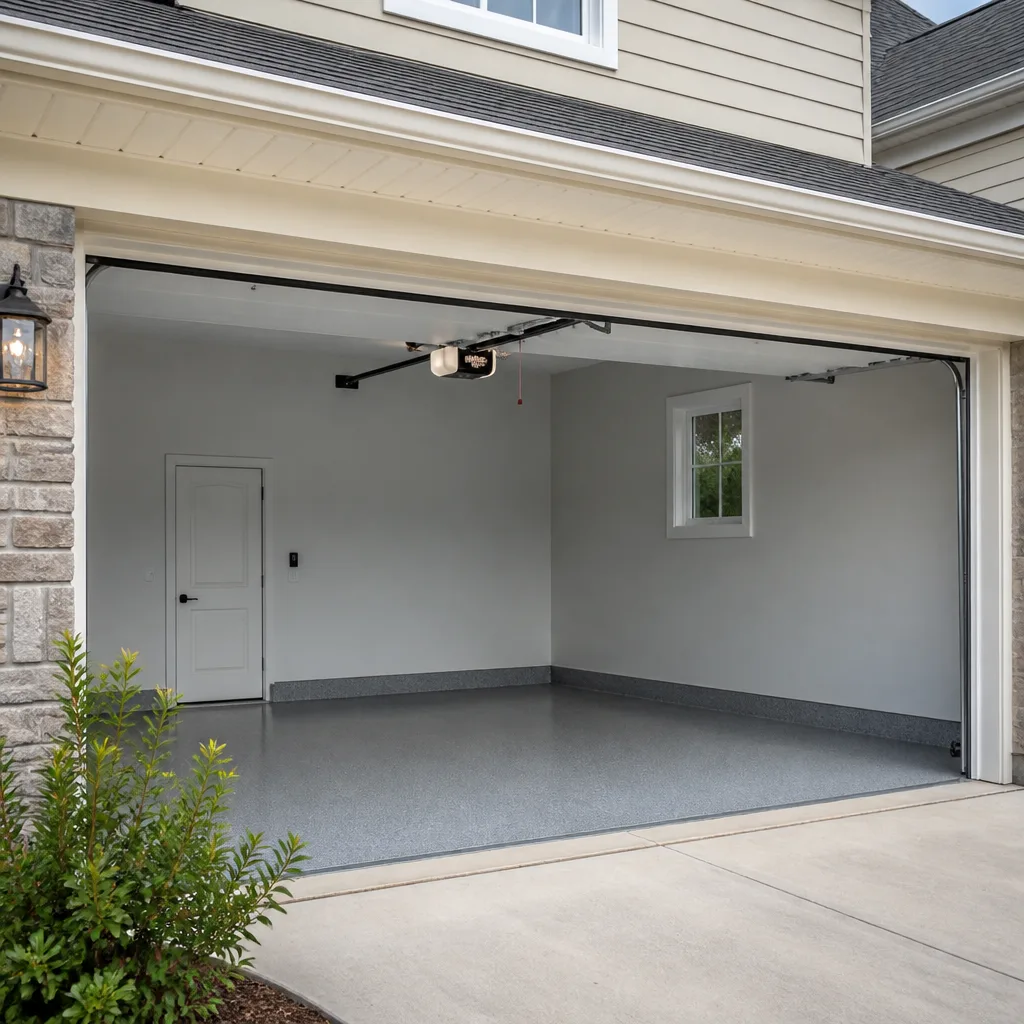
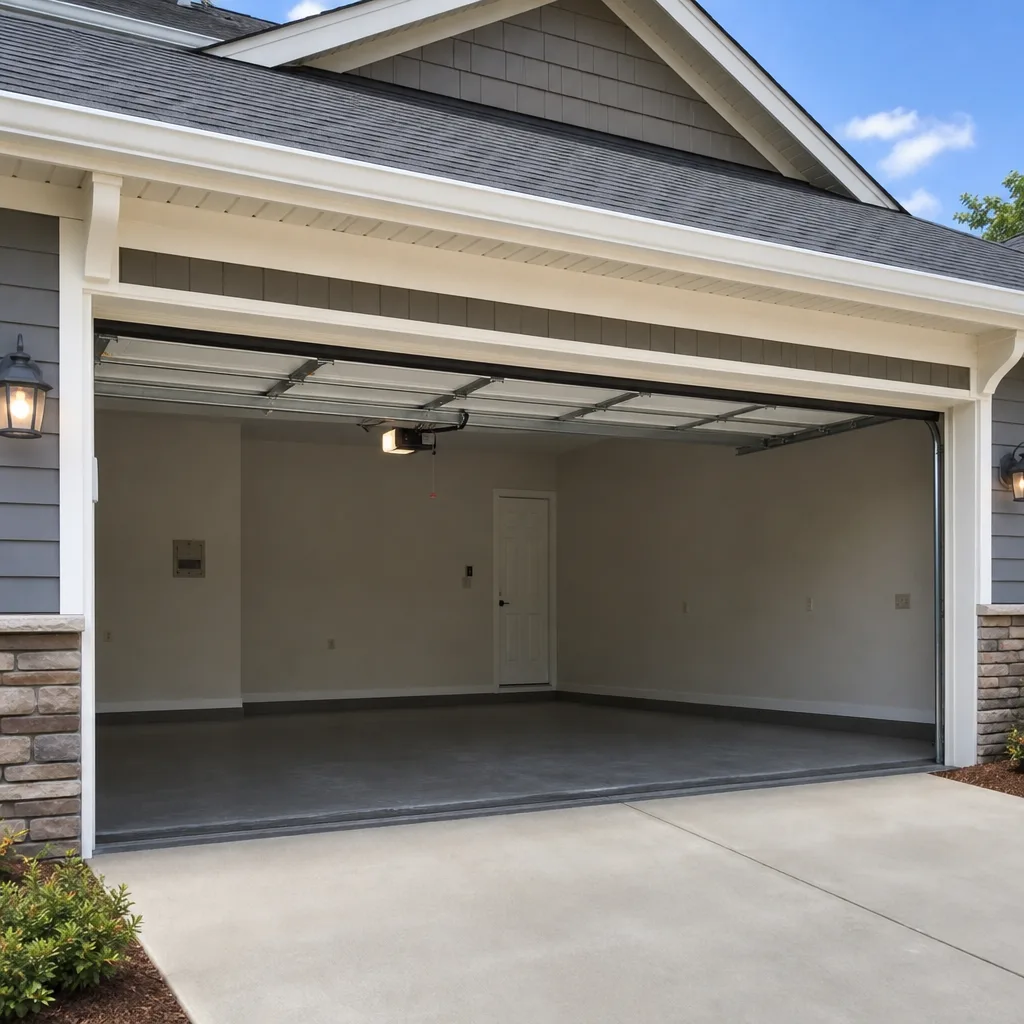
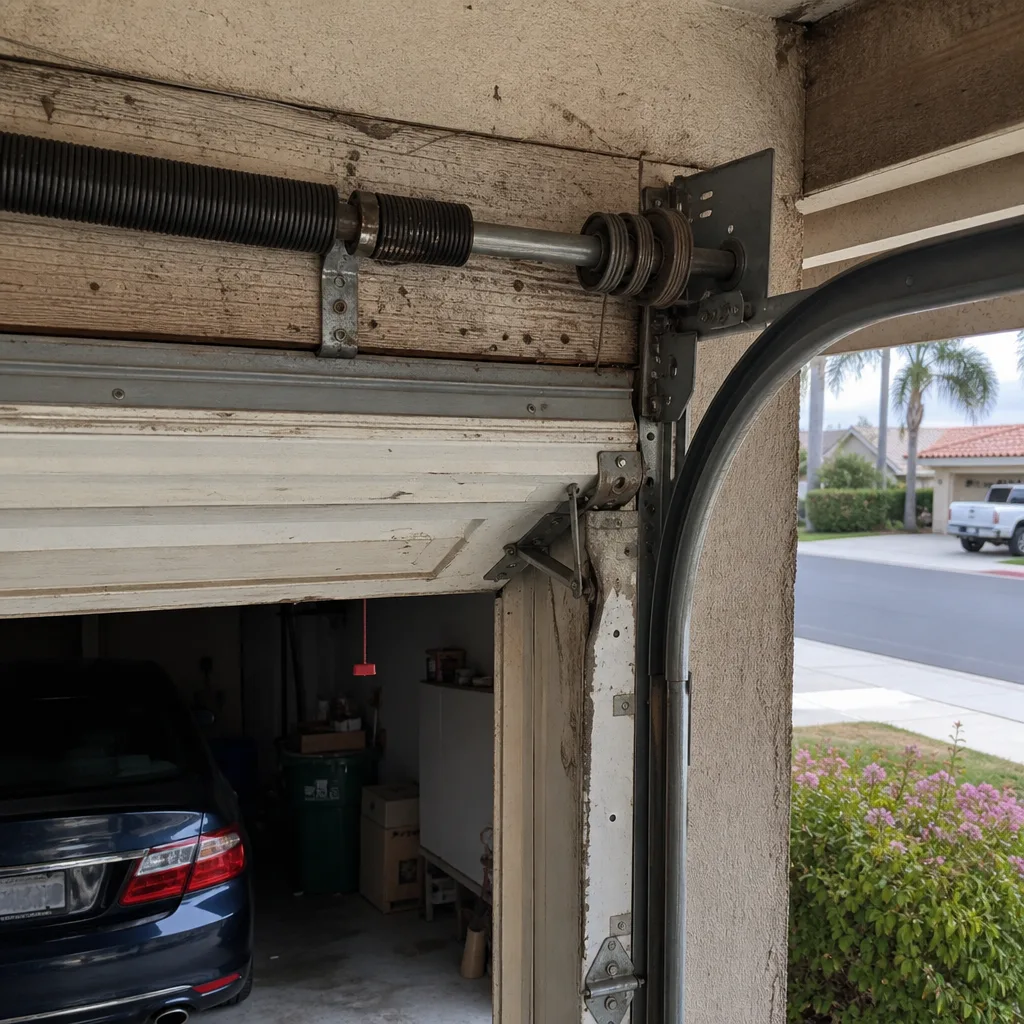 Before
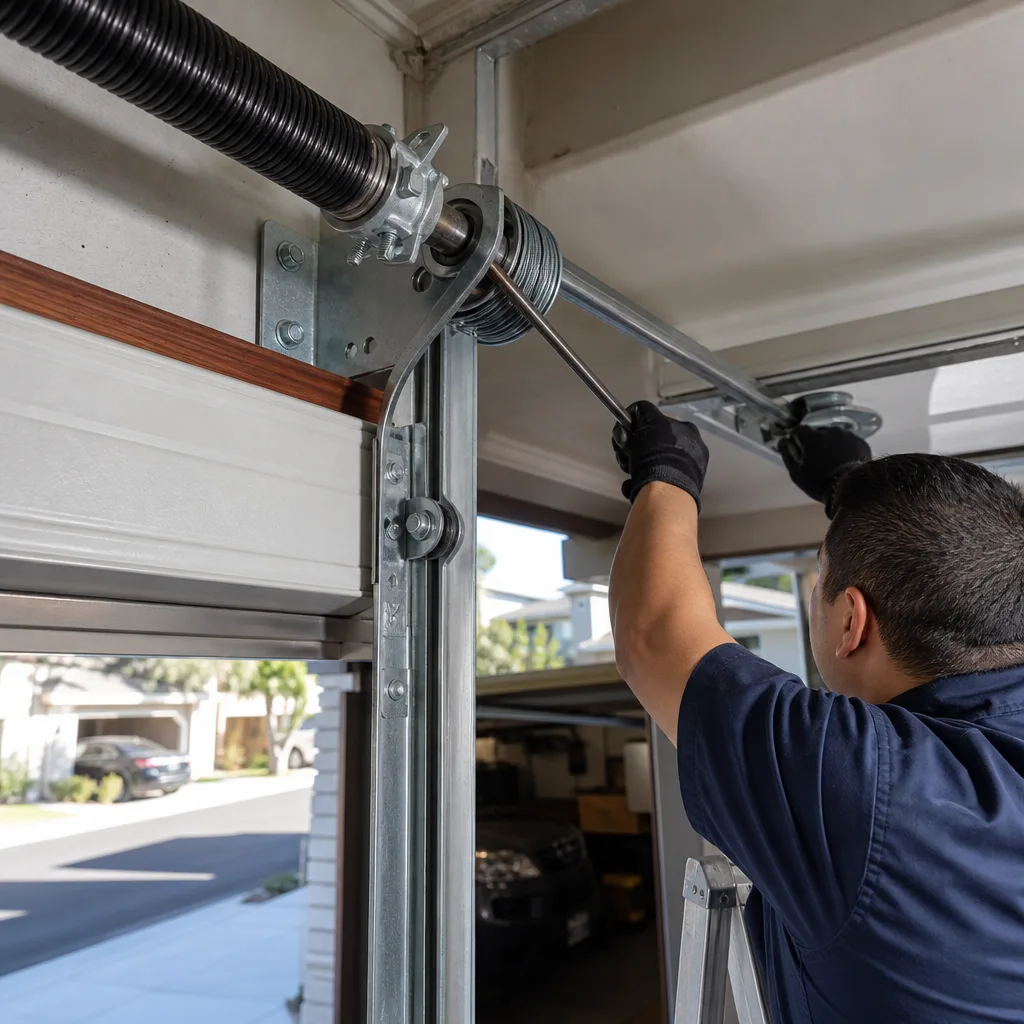 After
After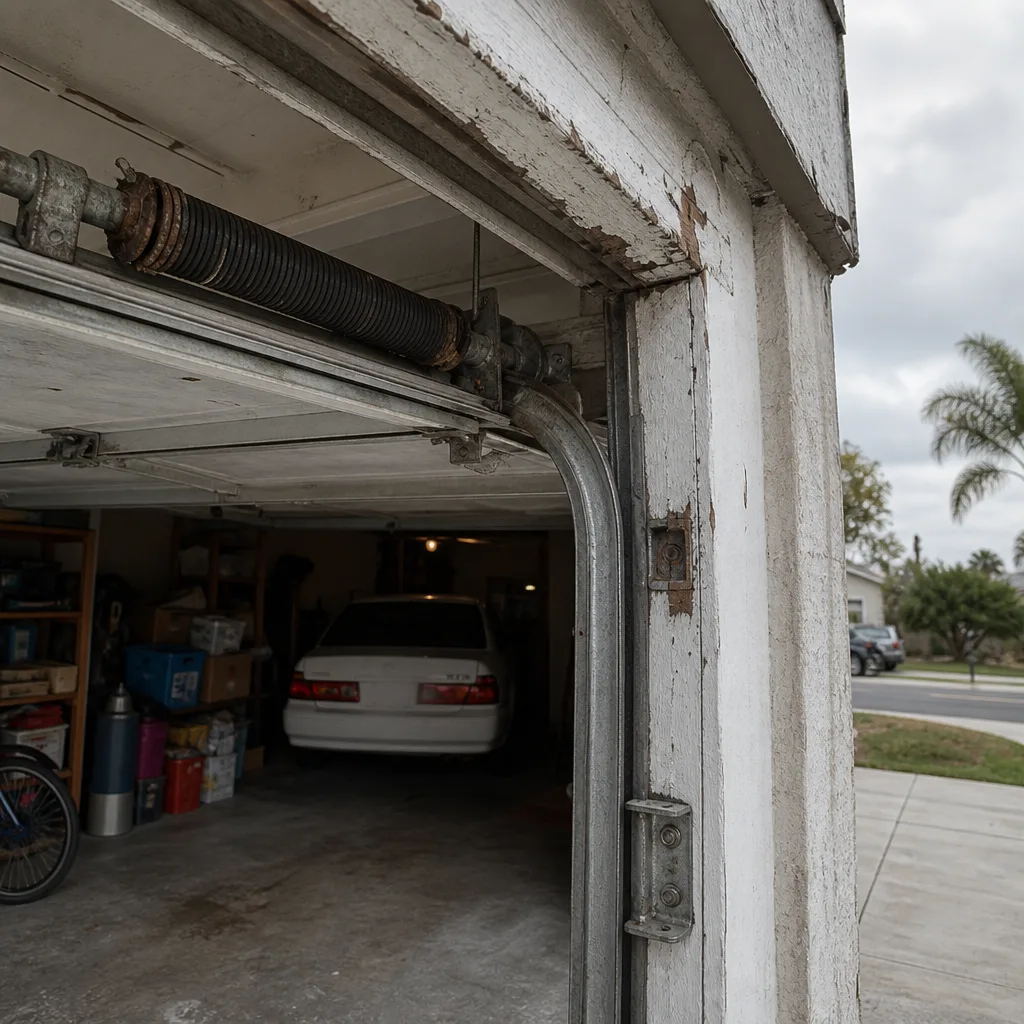 Before
 After
After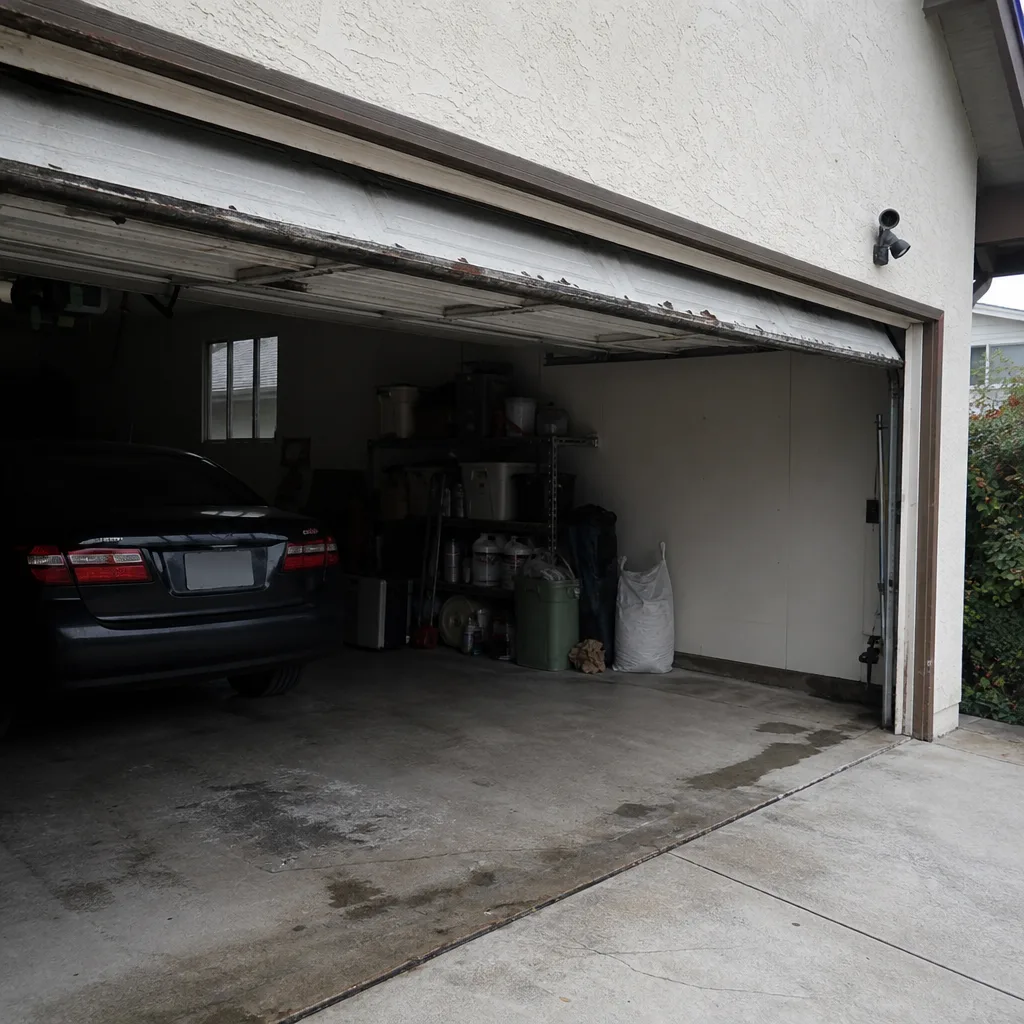 Before
 After
AfterGarage Door Warning Signs: A Carlsbad Homeowner’s Reference Guide
A garage door that takes two button presses to close is not a remote battery problem in nine out of ten cases. It is a photo-eye misalignment or sensitivity drift, and in California, operating a door with that fault is a safety code violation. Most Carlsbad homeowners we meet have been living with warning signs for months, interpreting grinding, shuddering, and slow travel as normal aging rather than specific mechanical distress calls. This guide maps every common symptom to its likely cause, tells you which ones can wait for a scheduled visit and which require same-day attention, and shows you how to describe what you are seeing so the right technician arrives with the right parts. For a broader overview, see The Complete Guide to Garage Door in Carlsbad.
Quick Answer
The most serious garage door warning signs are broken or frayed cables, a door that will not stay open halfway, and any grinding or popping from the spring area. These indicate high-tension component failure and need same-day professional attention from a qualified contractor. Less urgent but still important signs include slow travel, seal gaps, and intermittent remote response, which typically allow a scheduled repair within a few days.
Table of Contents
- Sounds and What They Mean: A Symptom-to-Cause Reference
- Visual Warning Signs Every Carlsbad Homeowner Should Check
- Slow Travel: Opener Problem or Spring Problem?
- Urgency Triage: Scheduled Visit or Same-Day Repair?
- Coastal Environment Damage: What Carlsbad’s Climate Does to Your Door
- How to Communicate Warning Signs So the Right Parts Arrive First
- Common Mistakes to Avoid
- When to Call a Professional
- Frequently Asked Questions
- The Bottom Line
Sounds and What They Mean: A Symptom-to-Cause Reference
Garage doors do not fail silently. The noise a door makes is the most reliable diagnostic tool a homeowner has, and each sound points to a specific component under stress. After 42 years in this trade, we have learned to treat the customer’s description of a sound as seriously as any test with a multimeter.
Grinding during opening or closing almost always indicates metal-on-metal contact where lubricated surfaces have dried out or where a roller bearing has seized. In Carlsbad, we see this frequently on doors facing direct afternoon sun, where the steel track expands slightly and rollers bind in the curve. The grinding location matters: grinding at the top of the track suggests a worn top roller or bent horizontal track section. Grinding at the bottom points to a seized bottom roller or debris in the track. If the grinding is rhythmic, matching the door’s travel speed, it is almost certainly a roller. If it is constant regardless of door position, inspect the trolley and rail on the opener.
Squealing or high-pitched whining comes from two sources. A squeal that rises in pitch as the door moves faster is typically a dry trolley or drive gear in the opener, common on older Chainberlain and Genie chain-drive units in the Rancho Carlsbad and La Costa areas where homes built in the 1980s and 1990s still have original openers. A squeal that stays constant regardless of speed suggests a dry hinge or roller bearing. The distinction matters because lubricating the wrong component wastes time and can mask a developing problem.
Popping or snapping sounds demand immediate attention. A single loud pop, often accompanied by a visible gap in the spring coil, means a torsion spring has broken. The door may still open if it has a two-spring system, but it is now operating with dangerous uneven tension. Multiple small pops during travel suggest a cable slipping over a frayed section or a cable drum with damaged grooves. Either condition can release stored energy without warning.
Shuddering or jerky travel indicates uneven force distribution. On a sectional door, this usually means one spring has lost tension while the other maintains full load, or a cable has stretched beyond its pair. On a one-piece swing-up door, shuddering at the start of travel points to a worn hinge at the jamb. The shudder location is diagnostic: shuddering only at the start suggests a spring or opener force setting issue. Shuddering throughout travel points to binding in the track system or a damaged panel.
Thumping or clunking at the end of travel is often dismissed as normal. It is not. This sound means the opener’s limit switch is misadjusted, allowing the motor to drive against the physical stop. On LiftMaster and Chamberlain belt-drive units common in newer Carlsbad developments like Bressi Ranch, this gradually damages the opener’s internal gear. The thump is the gear skipping teeth.
| Sound | Most Likely Component | Typical Cause |
|---|---|---|
| Grinding | Rollers or track | Dry bearings, seized roller, track deformation |
| Squealing | Opener drive or hinges | Dry trolley gear, dry hinge pins |
| Popping | Torsion spring or cable drum | Broken spring wire, frayed cable, damaged drum grooves |
| Shuddering | Spring system or track | Uneven tension, binding rollers, damaged panel |
| Thumping at stop | Opener limit switch | Limit switch drift, worn gear |
Visual Warning Signs Every Carlsbad Homeowner Should Check
A monthly two-minute visual inspection catches most problems before they become emergencies. You do not need tools. You need to know what to look for.
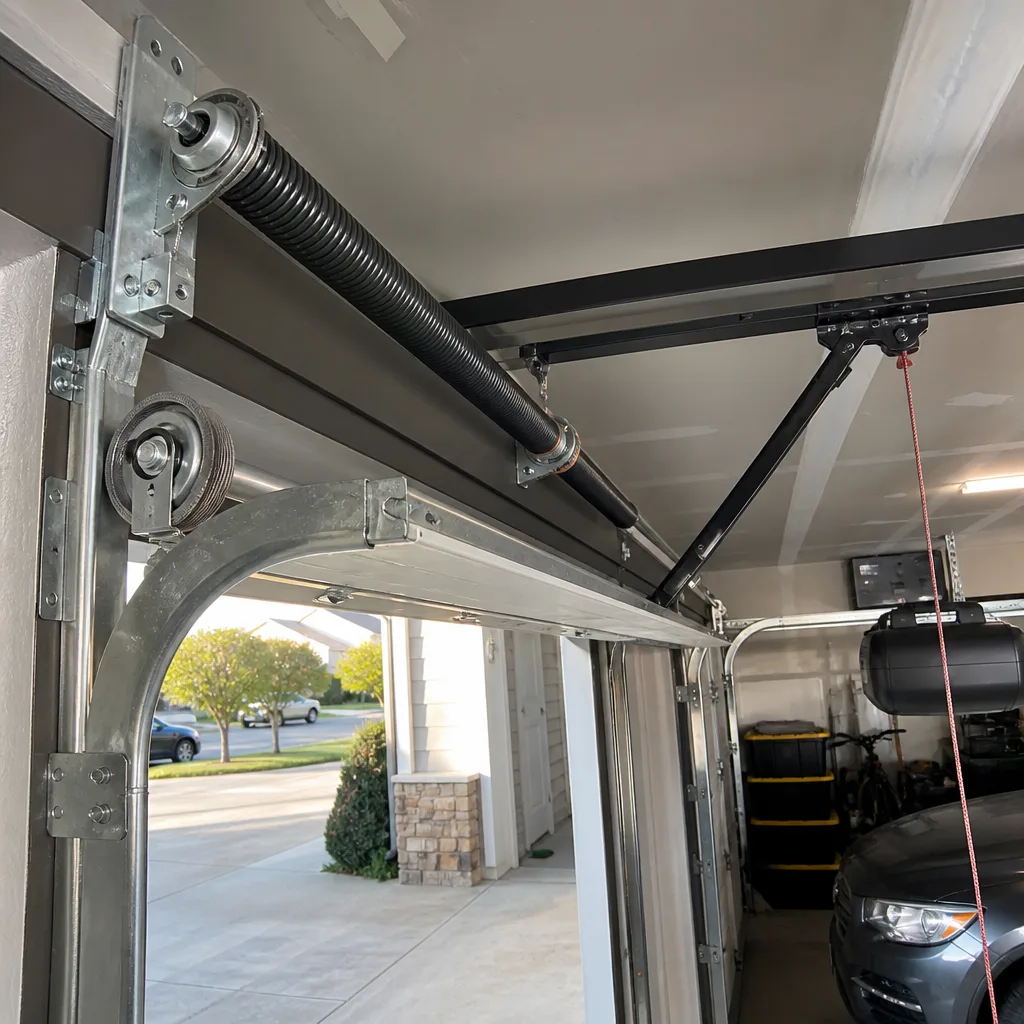
Spring condition: Stand inside the garage with the door closed and look at the torsion spring above the header. The coil should be tightly wound with consistent spacing between each wire turn. A gap of even a quarter inch means a broken inner coil, and the spring is operating at reduced capacity. Rust streaks running down from the spring ends indicate corrosion at the stationary cone, which weakens the wire at its highest-stress point. In coastal Carlsbad, where morning marine layer deposits salt on every exposed surface, we replace springs with visible rust bloom far more often than inland shops.
Cable condition: Inspect the lift cables where they wrap around the drum at the top of each track. Fraying appears as fuzzy or unwound strands before any visible break. A cable with more than three frayed strands in a one-inch section needs replacement. Also check for cable unwinding from the drum grooves, visible as a loose loop or irregular layering. This indicates a drum with worn grooves or improper cable tension.
Roller condition: Steel rollers show wear as flattened or grooved wheels. Nylon rollers crack at the wheel-to-stem junction. The critical check: with the door closed, grasp a roller stem and attempt to move it side to side. Any play means the roller bearing is worn and the roller will soon bind or derail.
Track alignment: The vertical track should be perfectly plumb. A track leaning into the garage, visible as a narrowing gap between track and door edge from bottom to top, means the jamb bracket has loosened or the track anchor has pulled free. This is common in older Carlsbad homes with wood frame construction, where seasonal moisture swelling and shrinking gradually loosens fasteners.
Panel and hinge condition: Look for dents that create sharp creases rather than smooth dents. A creased panel has compromised structural integrity and will eventually crack at the fold. Check hinges for cracks at the bolt holes, the most stressed area. A cracked hinge transfers load unevenly to adjacent hinges and accelerates their failure.
Weather seal: The bottom seal should contact the floor evenly across the full width. Gaps at the corners allow water intrusion during Carlsbad’s occasional heavy winter storms and provide entry points for rodents. Seal compression set, visible as a permanently flattened profile even when the door is open, means the seal has lost resilience and no longer blocks wind or water.
Slow Travel: Opener Problem or Spring Problem?
Homeowners frequently misdiagnose slow door travel as an opener issue when it is actually a spring problem, or vice versa. The wrong diagnosis leads to unnecessary opener replacement or a dangerous delay in spring service.
Signs the opener is the problem:
- The door moves slowly but evenly, without shuddering or binding.
- The opener motor sounds strained or hot-smelling after a cycle.
- The slow travel began suddenly after a power outage or electrical work, suggesting a force setting reset.
- The door moves freely by hand when disconnected from the opener.
Opener-related slow travel on modern units usually means the force or speed setting has drifted. On LiftMaster and Chamberlain units with MyQ connectivity, a firmware update can occasionally reset these to conservative defaults. The motor may also be failing, though this typically presents as intermittent stopping rather than consistent slowness.
Signs the spring system is the problem:
- The door feels heavy when lifted manually after disconnecting the opener.
- The door descends faster than it rises, or drifts closed when left halfway open.
- The opener strains at the start of travel but sounds normal once the door is moving.
- The slow travel developed gradually over weeks or months.
A properly balanced door with correct spring tension should stay at any position when stopped halfway open. If it drifts up or down, the spring tension is incorrect. In Carlsbad’s mild climate, springs typically last seven to twelve years depending on cycle count. A door used four times daily accumulates roughly 1,460 cycles annually. Most residential springs are rated for 10,000 cycles, so a heavily used door in an active household may need spring replacement in six to eight years.
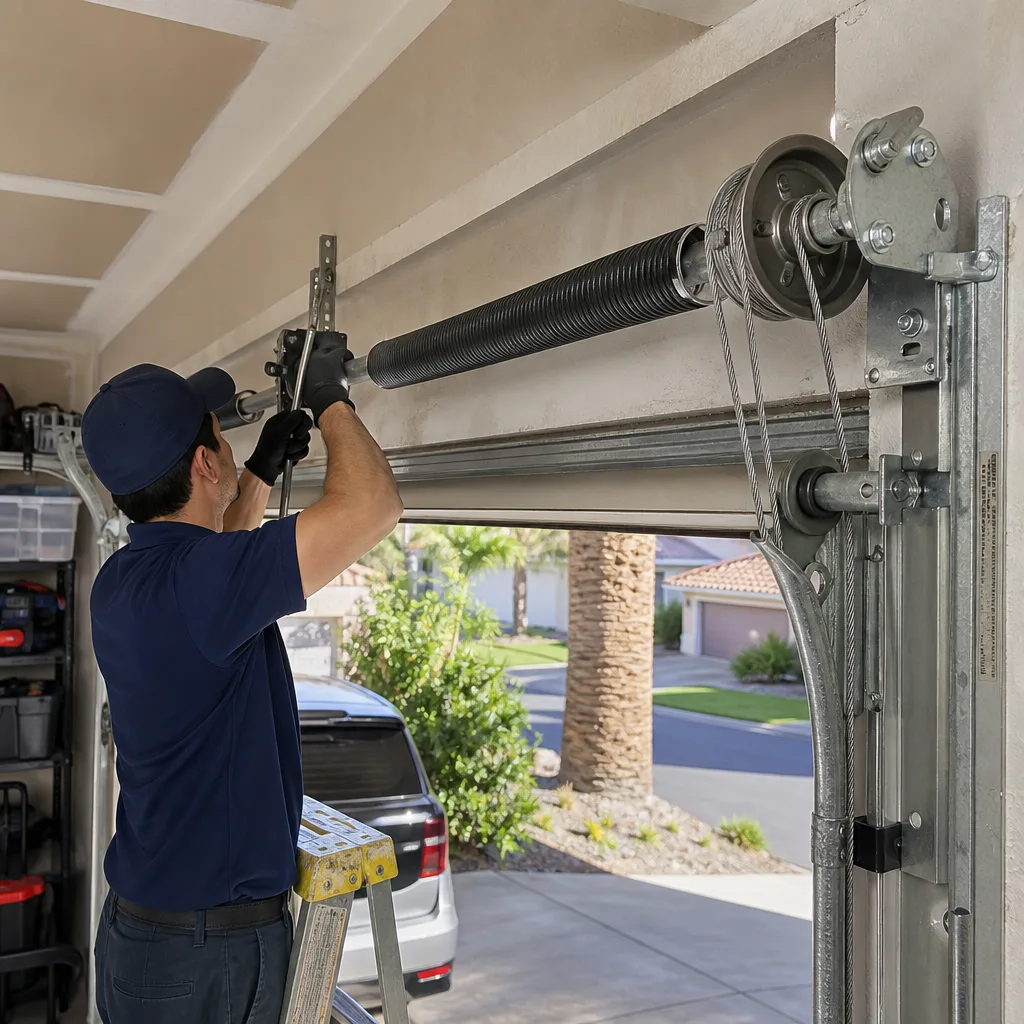
The critical safety point: never adjust spring tension yourself. Torsion springs store enough energy to cause serious injury or death. The winding bars must be inserted properly, and the specific turns must be calculated based on door weight and drum geometry. We have responded to emergency calls in Carlsbad neighborhoods from Tamarack to Aviara where a homeowner’s DIY adjustment released unexpectedly.
Urgency Triage: Scheduled Visit or Same-Day Repair?
Not every warning sign demands immediate dispatch. Some conditions allow you to schedule conveniently. Others require same-day attention because they present safety hazards or will rapidly worsen. This triage framework helps you decide.
Same-day priority conditions:
- Broken spring with the door open or partially open: The door cannot be secured, and the open position creates a security and weather exposure risk. If the door is closed and you can engage the manual lock, this becomes scheduled-priority rather than same-day.
- Frayed cable with any visible strand separation: A cable can fail without warning, and when it does, the door may drop violently or jam catastrophically.
- Door that will not stay open or closed: This indicates a spring or cable failure in progress and creates immediate safety and security problems.
- Opener running but door not moving, with grinding from the motor: The drive gear is stripped. Continued operation destroys the opener entirely.
- Photo-eye fault that prevents door closure: California Building Code requires functional safety reverse systems. Operating a door with this fault violates code and creates liability.
Scheduled-priority conditions:
- Gradual slowing of travel with no binding or heavy feel: Likely opener adjustment or aging. Safe to operate while scheduling.
- Minor seal gaps or weatherstripping deterioration: Comfort and efficiency issue, not safety.
- Cosmetic panel damage without structural creasing: Aesthetic concern unless the damage affects track alignment.
- Remote intermittent response with clear line of sight: Usually battery or interference. Test with a fresh battery first.
- Single noisy roller or hinge: Annoying but not dangerous if the door travels smoothly.
In our experience serving Carlsbad since 2016, the most expensive repairs we encounter started as scheduled-priority conditions that the homeowner delayed until they became same-day emergencies. A noisy roller that is ignored eventually seizes, derails the door, and damages adjacent panels. A slow-travel door with weakening springs eventually overworks the opener until both need replacement.
Coastal Environment Damage: What Carlsbad’s Climate Does to Your Door
Carlsbad’s location two miles from the Pacific creates specific corrosion patterns that inland homeowners do not experience. Understanding these helps you distinguish normal wear from accelerated coastal damage.
Rust bloom at cable drum flanges: The cable drum is cast aluminum with a steel flange where it mounts to the shaft. Salt-laden morning fog condenses on this dissimilar metal junction, creating galvanic corrosion that appears as orange-brown staining. This is not merely cosmetic. The corrosion swells the flange, binding the drum against the bearing plate and causing the shuddering travel described earlier. We see this pattern frequently in ocean-view homes above Carlsbad Boulevard and in the Terramar neighborhood.
White mineral crust on rollers and hinges: When salt spray dries, it leaves calcium and magnesium deposits. On nylon rollers, this crust accelerates bearing wear by acting as an abrasive. On steel hinges, it traps moisture against the pin, causing pitting. The crust is visible as a chalky white residue, distinct from normal dust. Monthly wiping with a damp cloth prevents buildup.
Seal shrinkage and hardening: Carlsbad’s combination of marine moisture and intense UV exposure degrades rubber compounds faster than either alone. A seal that looks intact but has developed a permanent compression set, or that has shrunk to create visible gaps at the ends, has lost its weather barrier function. This is particularly important for homes near the lagoon or in lower-elevation areas where winter storm drainage can back up.
Track corrosion at the lower bends:
The transition from vertical to horizontal track is the lowest point where moisture collects. In coastal environments, this section develops internal corrosion that is not visible until the track wall thins and deforms under load. We inspect this area with a flashlight and mirror during every service call in coastal Carlsbad ZIP codes.
Opener circuit board damage: Salt air penetrates opener housings through ventilation slots and condenses on circuit boards. The damage is not immediate failure but intermittent operation, false obstacle detection, and shortened remote range. We recommend opener models with conformal-coated boards for coastal installations, a specification we confirm before recommending any replacement unit.
For homeowners in Carlsbad Village, the Barrio, or any property within a mile of the shore, we suggest reducing the standard annual inspection interval to every eight months. The Garage Door Repair in Carlsbad page details our seasonal maintenance program.
How to Communicate Warning Signs So the Right Parts Arrive First
One of our differentiators is completing most jobs in a single visit because our trucks carry the parts we need. But this depends on accurate diagnosis before dispatch. When you call with warning signs, specific information gets you faster, more precise service.
Describe the sound precisely: “Grinding” and “squeaking” are different problems requiring different parts. Note when the sound occurs: at start, during travel, at stop, or throughout. Note whether it changes with door position. “Grinding only in the last two feet of closing” tells us to inspect the bottom rollers and track transition specifically.
Identify the door and opener: The door manufacturer’s name is usually on a label between sections or on the interior face. The opener model is on a label near the light lens or on the side of the motor housing. For common Carlsbad brands like Clopay and Amarr doors with LiftMaster or Chamberlain openers, we stock most wear parts. For less common brands, the model number lets us confirm stock before dispatch.
Describe the failure sequence: Problems that developed gradually suggest wear. Sudden onset suggests a component failure. “The door started slowing three weeks ago” points to spring fatigue. “The door was fine yesterday morning and would not open last night” suggests a cable or spring break.
Test the door manually: Pull the red emergency release handle and lift the door halfway. A properly balanced door stays in position. If it falls, the springs need attention. If it rises, the springs are over-tensioned. Either condition tells us what to bring. Report this result when you call.
Photograph visible damage: A photo of a broken spring, frayed cable, or damaged panel lets us confirm the required parts and sometimes identify secondary issues before arrival. Text the photo to our shop number when you call.
State your scheduling flexibility: If your condition is scheduled-priority rather than same-day, letting us know your availability allows us to route efficiently. We serve the full Carlsbad area from La Costa to the village, and clustering appointments by neighborhood reduces drive time and lets us offer more flexible windows.
Carl Dutton established this communication protocol based on decades of callback frustration. A technician who arrives without the correct spring wire size or cable drum type must either make a second trip or install a temporary solution. Neither is acceptable under our Mainspring Garage Door Co. home standards.
Common Mistakes to Avoid
- Assuming two button presses means a remote battery problem. In Carlsbad, we find misaligned photo-eyes in roughly 90 percent of these cases. The second press overrides the safety timeout. Replace the battery first if you want, but check the eye alignment before calling for service.
- Lubricating everything with WD-40. This product is a solvent and water displacer, not a lubricant. On garage door components, it attracts dust and forms a grinding paste. Use a lithium-based grease on metal-to-metal contact points and a silicone spray on weather seals.
- Ignoring a door that reverses before hitting the floor. This is not a quirk. It means the close-force setting is too sensitive or the track has a binding point. Operating the door in this condition gradually damages the opener drive system.
- Waiting for a broken spring to break completely. A spring with a visible gap is already failed. Continuing to operate the door overloads the remaining spring, the opener, and the cables. The repair becomes more expensive, not less.
- Adjusting spring tension or cable drums without training. The torque in a standard torsion spring can cause severe laceration, amputation, or death. Every year we see injuries from well-intentioned DIY attempts. This is not a savings; it is a gamble with unacceptable odds.
- Replacing an opener without checking door balance. A heavy door burns out even a new opener in months. We always verify spring condition before recommending opener replacement, and we refuse to install openers on doors we have not balanced.
- Choosing the lowest bid without verifying what is included. In the Carlsbad market, some quotes include only the broken spring while others include both springs, cables, rollers, and a safety inspection. A valid comparison requires line-item detail. Our quotes specify every component and its warranty term before any work begins.
When to Call a Professional
Call when you observe any same-day priority condition: broken spring, frayed cable, door that will not stay positioned, or safety system fault. Call when gradual symptoms persist beyond two weeks despite basic maintenance. Call before attempting any adjustment to springs, cables, or opener force settings.
We answer every call with a live person, including nights and weekends. Our technicians arrive in marked vehicles with background-checked, uniformed personnel. We stock springs, cables, rollers, and openers for all major brands, and we state the flat price before any work begins. Garage Door Repair in Carlsbad is our core service, and we have completed thousands of repairs in neighborhoods from Calavera Hills to Robertson Ranch.
Mainspring Garage Door Co. offers free estimates in Carlsbad. Call (760) 852-7175.
Frequently Asked Questions
Spring replacement in Carlsbad typically runs $180 to $340 for a standard two-car residential door, depending on spring type, door weight, and whether one or both springs need replacement. We quote the exact price after measuring the door and inspecting the full system, and we state that price in writing before any work begins. Call (760) 852-7175 for a free estimate.
A noisy door is not automatically dangerous, but the underlying cause often becomes dangerous if ignored. Grinding from a seized roller can derail the door. Popping from a fatigued spring precedes sudden breakage. The noise is the door’s warning system. Addressing it promptly prevents the emergency that follows.
The most common causes are photo-eye misalignment, close-force sensitivity set too high, or mechanical binding in the track. In Carlsbad’s coastal environment, salt spray can cloud the photo-eye lenses, causing false obstruction readings. Clean the lenses with a soft cloth first. If the problem persists, the eyes need realignment or the track needs inspection.
For most Carlsbad homes, an annual safety inspection and tune-up is sufficient. Homes within a mile of the coast, or those with heavy daily use, benefit from inspection every eight months. Our $89 Seasonal Tune-Up includes spring tension verification, roller and hinge inspection, track alignment check, opener safety system test, and lubrication of all moving parts.
No. Our price is stated and agreed before work begins. If we discover additional problems during inspection, we explain them and quote separately. You approve every line item. There are no surprises on the bill. This is our standard practice, not a special offer.
Yes. Our trucks stock torsion and extension springs in common wire sizes, lift cables, rollers, hinges, weather seals, and replacement openers from LiftMaster, Chamberlain, and Genie. For Clopay, Amarr, and other door brands, we carry universal-fit wear parts and can source manufacturer-specific components same-day if needed. We confirm stock before dispatch based on your description.
The Bottom Line
Your garage door communicates its condition through specific sounds, visible wear patterns, and changes in travel behavior. Learning to read these signs lets you schedule maintenance before emergencies develop and describe problems accurately when you do call for service. In Carlsbad’s coastal climate, proactive attention to salt corrosion and UV degradation pays particular dividends. The most expensive repair is always the one that was delayed until collateral damage made it unavoidable. A door that runs quiet, stays balanced, and reverses on contact is not merely convenient. It is a door that will not demand attention at the worst possible moment.
For homeowners considering replacement rather than repair, our Garage Door Installation in Carlsbad page covers selection and sizing. For opener-specific concerns, see Garage Door Opener in Carlsbad.
Written by Carl Dutton, Owner at Mainspring Garage Door Co., serving Carlsbad since 2016.